BDSM Books for Submissives: 25 Worth Reading, With Verdicts
The best BDSM books for submissives are the ones that teach you to read a person and to say what you need. These 25 real titles were read from the other chair, and each comes with a verdict and a caveat.
 By Sir Linus Updated November 23, 2026 14 min read

If you want the short answer to which BDSM books are worth a submissive’s time: begin with The New Bottoming Book for your own side, SM 101 for safety, Tongue Tied for communication, and The New Topping Book to see what a competent dominant does. The other 21 below are sorted by what they do for you, and each carries a caveat.
I read them all before I asked anyone else to. That felt like the right order. I didn’t need anyone’s permission to dominate, but a dominant who hasn’t done the reading is a person asking for your trust while carrying secondhand assumptions. Every book on this list shaped something in how I understand what happens between two people in a power exchange. Some of them I read because I was curious. Some I read because a woman I was responsible for handed them to me, quietly, as a test.
What makes a reading list from the dominant’s chair different is exactly this: I was not reading to learn how to submit. I was reading to understand what you are experiencing from inside an arrangement I am steering. That is a different kind of attention, and it is why, for some of these titles, my annotation will look different from every other recommendation you have encountered.
Book links on this page are affiliate links; see the affiliate disclosure. It costs you nothing and keeps the publication free.
What to take from this
- Some of the most important books for submissives were written for someone else: much of the most protective reading you can do is in the titles written for dominants.
- No single book on this list is complete; each has a blind spot, and naming those blind spots is part of the work. A reading list that pretends otherwise is selling you something.
- Reading across the literature (beyond the beginner titles, and beyond "your side") is how you build the kind of discernment that protects you in real dynamics with real people.
Where to start: the essential books for submissives
The first two titles are the ones I would hand to any woman at the beginning. They establish the vocabulary and the safety architecture, and the first also captures the specific interior experience of being on your side of a power exchange. Everything else on this list builds on a foundation these two lay.
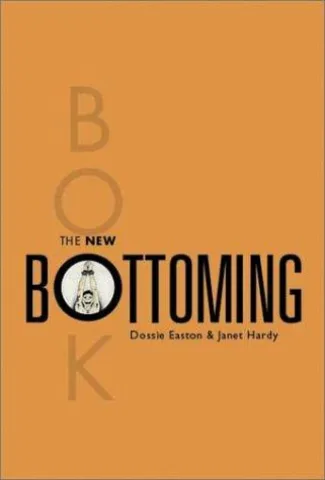 The New Bottoming Book by Dossie Easton & Janet W. Hardy
This is the book for your side. Easton and Hardy write with the kind of practical warmth that is rare in this genre; they take the bottom’s experience seriously as an interior event rather than a choreography of response. What it does especially well is give language to the psychological texture of surrender: what it actually means to give over control, how that is different from passivity, and what a bottom needs to be able to hold her own safety while doing it. The honest caveat: the book’s framing tilts heavily toward scene-based BDSM; the more continuous D/s arrangements some of you live in get less direct attention. Read it anyway, because the foundational material is irreplaceable.
 SM 101: A Realistic Introduction by Jay Wiseman
The safety classic. Wiseman’s risk chapters remain the most honest and useful in the literature; he does not pretend that certain activities are safe when they are not, and he explains the physiology in enough detail that you understand the why behind the what. The book has aged in places, particularly in its gender framing and its assumption of a specific het-cis dynamic. Read past that. The medical and physical risk material earns its place regardless, and a submissive who has read it is materially safer than one who hasn’t. I would rather you find it dated in tone and current in judgment than the reverse.
The craft: technique, breadth, and the skill that matters most
This group covers the practical range of BDSM (the activities and the scene-craft) plus the one skill that, in my experience, determines more than anything else whether a dynamic holds up over time.
Screw the Roses, Send Me the Thorns by Philip Miller & Molly Devon
The playful classic. Miller and Devon’s tone is lighter than the Easton/Hardy titles (dryer, more wry), and their coverage of scene-craft and equipment is thorough. The photography dates it visually (it is very 1990s) but the practical content survives. What I found most useful reading it from my chair was how clearly it illustrated the preparation and intention a dominant brings to a scene, treating it as a craft. Understanding that preparation from your side is useful: it raises your standard for what you should expect from someone who claims to know what they are doing.
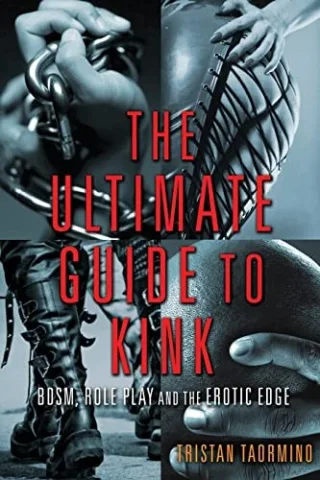 The Ultimate Guide to Kink edited by Tristan Taormino
An essay collection, and that format is both its strength and its limitation. The breadth is genuine; Taormino assembled writers who specialize, and the specialist chapters on their respective activities are frequently the best short writing on those topics anywhere. What the format sacrifices is coherence: it reads as an anthology. Use it as a reference and for the essays that speak to your specific interests. Do not expect it to build a framework the way Easton/Hardy does.
Tongue Tied by Stella Harris
The most underrated title on this list. Harris writes specifically about communication and negotiation in kink, which sounds dry and is the opposite. The skill she teaches is the one I have watched more dynamics fail for lack of than any other: the ability to say precisely what you want, what you don’t want, and what is happening for you in real time, to a person you have handed authority to. The structural difficulty there is obvious: negotiating with someone you’ve given power over you requires a specific kind of clarity. Harris teaches it without making you feel that wanting to submit is itself the problem. Read this one early, before you are deep in a dynamic.
His side: read it anyway
This is the group that will feel counterintuitive, and it is the group I would argue hardest for. Reading the books written for dominants is the most effective vetting tool available to you. A dominant who hasn’t thought through the responsibilities named in these books is a person you will recognize, after you have read them, before the dynamic gets difficult.
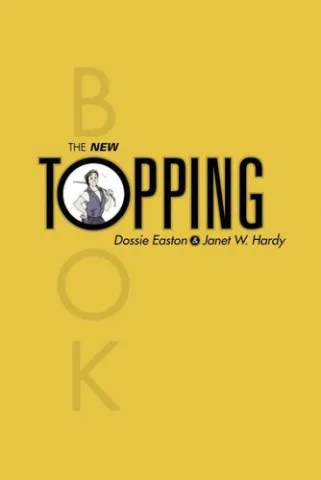 The New Topping Book by Dossie Easton & Janet W. Hardy
Read this because it is his manual. What a competent dominant is supposed to carry (the aftercare responsibility, the obligation to hold the container reliably, the emotional labor that scene-craft requires from the person in charge) is laid out clearly here. When you know what competent looks like from the other side, you can notice its absence, and that recognition counts for a great deal. The book is also honest about the top’s interior experience in ways that may make your dominant’s behavior more legible to you: why he needs debrief, what a scene costs him, what he is tracking while you are not tracking anything at all.
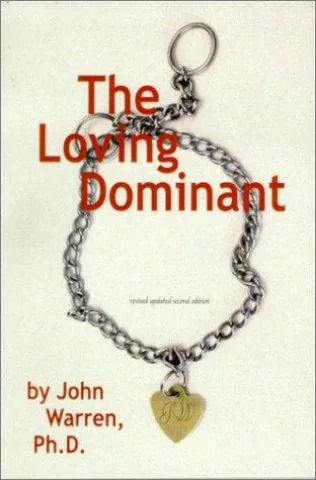 The Loving Dominant by John & Libby Warren
Older, occasionally clunky; the gender framing is firmly of its era, and the assumptions about relationship structure feel dated in places. Still one of the few serious books written from and to the dominant perspective, which makes it worth reading for the same reason as the Topping Book: you want to know what a thoughtful dominant in a long-term dynamic is supposed to be thinking about. What I found most worth the price of admission is how seriously it treats the dominant’s responsibility for the submissive’s wellbeing, beyond her service. The caveat is real: read it as a historical document in parts, and weight the material that has aged well against the material that hasn’t.
The mind underneath
These three titles sit outside BDSM books in the conventional sense: two are adjacent, and one is squarely mainstream psychology. All three shaped how I understand desire, community, and the practical ethics of sharing yourself with another person. I recommend them precisely because they come from outside the genre and bring a different kind of clarity.
 Come As You Are by Emily Nagoski
Mainstream, grounded in peer-reviewed desire research, and almost certainly the book that will explain your own arousal to you more clearly than any kink-specific title on this list. Nagoski’s dual-control model (the accelerator and the brake) is useful for understanding why you respond the way you do in a dynamic, and why that response sometimes stops making sense to you. Knowing yourself as a submissive requires knowing how your desire actually works, which may differ from how you think it should work, and this book does that. It is also completely accessible to anyone in your life if you want to point someone toward it; the lack of kink-specific framing is a feature here.
Playing Well with Others by Lee Harrington & Mollena Williams
Community, etiquette, and the social architecture of kink: the book covers how to navigate events, find your people, and build the relationships around a dynamic as well as the dynamic itself. Harrington and Williams write from positions of genuine community experience, and the book carries the weight of that. If you are isolated in your practice (no local community, no people who know this part of you), this title gives you a map of what community could look like and how to enter it without walking into avoidable situations with your eyes closed.
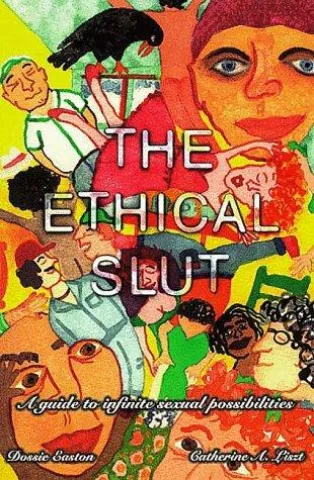 The Ethical Slut by Dossie Easton & Janet W. Hardy
The negotiation and jealousy toolkit of the polyamory literature, with the honest caveat that it is written for a broader audience than D/s and leaves aside the specific complications of navigating jealousy, consent, and structural agreements inside a power-exchange dynamic. What it does address, clearly and without moralizing, is how to have honest conversations about what you want, what you’re afraid of, and what the terms of your arrangement actually are. That conversation is as necessary in a D/s relationship as in any other, and Easton and Hardy are unusually good at teaching it. Read it for the negotiation mechanics; translate them yourself to the context you are actually in.
The second shelf: books on power exchange itself
Once the first group is behind you, these five go deeper into D/s as a subject. Some are older and some are academic. All are real, in print or easy to find used, and each is useful for a different reason.
Different Loving: The World of Sexual Dominance and Submission by Gloria G. Brame, William D. Brame and Jon Jacobs
A study of dominance and submission built on the voices of people who live it. Its value is perspective: you see that your wanting is shared by many ordinary people, described without sensationalism. The caveat is age. It reads as a document of its decade, so use it for the human portraits rather than for practical rules.
Come Hither: A Commonsense Guide to Kinky Sex by Gloria G. Brame
A plainer, more practical book from one of the authors above. It is a good bridge for a reader who wants an overview of the territory without academic weight. The caveat is that it covers a wide range of practices, and much of that range is not your business yet. Read for the sections on communication and starting out.
Erotic Surrender: The Sensual Joys of Female Submission by Claudia Varrin
One of the few books addressed specifically to women who submit, written by a woman who works as a professional dominatrix and knows the dynamic from the other side. It takes your wanting seriously and argues against the idea that it is a flaw. The caveat is its enthusiasm: it makes the case for submission more than it tests the risks, so pair it with SM 101.
Sensuous Magic by Patrick Califia
A guide to S/M for couples, mixing practical advice with the author’s own voice. Its strength is the attention to communication and negotiation before anything happens. The caveat is that it is written for couples already together; if you are still searching, much of it will wait.
Sadomasochism: Powerful Pleasures edited by Peggy J. Kleinplatz and Charles Moser
An academic collection by sexologists, psychologists and medical writers that pushes back on the old idea that kink is a disorder. Read it if the shame of your own search history is loud, since it is calm, scholarly evidence that you are not broken. The caveat is that it is a textbook, so dip into the chapters rather than reading cover to cover.
Communication, boundaries and attachment
A power exchange runs on the same skills as any close relationship, only with higher stakes. These six books are not about BDSM at all, and several of them will do more for your safety than a scene manual.
Attached by Amir Levine and Rachel S. F. Heller
An accessible account of attachment styles in adult relationships. It helps you see why you chase, withdraw or go quiet when a partner is distant, which matters a great deal in a dynamic that depends on trust. The caveat is that it sorts people into a few types, and real people are messier than that.
Nonviolent Communication by Marshall B. Rosenberg
A method for saying what you observe, feel and need without attacking or collapsing. It is useful for the exact moment you have to tell a dominant that something did not work. The caveat is that the formal phrasing can feel stiff at first; take the principle and make the wording your own.
Set Boundaries, Find Peace by Nedra Glover Tawwab
A practical guide to naming and holding limits with family, work and partners. It gives you rehearsal for the habit that protects you most: noticing a limit and saying it aloud. The caveat is that it is about ordinary relationships, so you translate the ideas to a negotiated dynamic yourself.
Mating in Captivity by Esther Perel
On the tension between security and desire in long relationships, and why the two pull against each other. It speaks to the reader whose wanting is strongest in the place she feels least safe saying it. The caveat is that it is not about kink; the connection is one you draw yourself.
Healing the Shame That Binds You by John Bradshaw
A long-standing self-help book on shame and how it forms. If you flinch at your own search query, this addresses the flinch. The caveat is its dated, recovery-movement language, and it is no replacement for a therapist if shame is heavy.
More Than Two by Franklin Veaux and Eve Rickert
A practical guide to ethical non-monogamy. It earns a place here only if your dynamic or your partner involves more than two people; if not, skip it. When it applies, its chapters on agreements and jealousy are clear and unsentimental.
Fiction and history: read it as a story, not a manual
These four are cultural landmarks. Knowing them helps you recognize where the fantasy comes from, and where real practice differs. None of them is a guide to safe behavior.
Venus in Furs by Leopold von Sacher-Masoch
The 1870 novella that gave masochism its name. It is a period piece with a contract at its center, and its interest is historical. The caveat is its romantic, ornate tone, which is far from a modern negotiated dynamic.
The Story of O by Pauline Réage
A French novel from 1954 about total surrender. It is a landmark and a fantasy, and I would not hand it to a woman looking for a model. It is a fantasy of total surrender with no negotiation in it, which is the opposite of what keeps you safe in life.
Fifty Shades of Grey by E. L. James
The book that brought the subject to a mass audience. Many readers found their first language here, and that counts for something. The caveat is serious: it shows a man who pressures, monitors and overrides, and calls that dominance. Use it to notice what to avoid.
Bad Behavior by Mary Gaitskill
A short-story collection, including the story that inspired the film Secretary. It is literary, uneasy and psychologically exact about wanting and shame. The caveat is that it does not resolve anything for you; it is for company, not instruction.
What the list is not
No reading list finishes the work. These 25 titles will give you a vocabulary and a framework for what thoughtful practice looks like, but they will not substitute for the difficult, ongoing conversation that a good dynamic requires. I have seen women arrive at a relationship with all of these read and still walk into danger, because the danger lived in the space between the books: in the specific person in front of them, and in the willingness to say what they saw clearly.
Use the reading as exactly what it is: preparation for discernment. The day-collar decisions you make, the limits you set and hold, the dominants you choose or decline: those happen in the room, not on the page. But the person who did the reading is better equipped for all of it.
It is an entirely sensible response to living in a world that does not yet handle this subject with much grace. The practical answer is Kindle with household sharing turned off, or a private shelf you don’t have to explain to visitors. Most of these titles have covers that are either nondescript or clearly “sexuality/relationships” without being explicit; only one or two read unmistakably as BDSM to the uninitiated. The more important answer, though, is this: you are allowed to have a reading life that belongs to you. The books on this list are not shameful. They are thoughtful, some of them well-written, and all of them are treating the subject with more seriousness than the people who would judge you for owning them. Your reading is yours, and no one is owed access to your library any more than they are owed access to your journal; a Kindle screen locks just as easily as a door.
As an Amazon Associate, Submissive Path earns from qualifying purchases.
Questions readers ask
What is the best BDSM book for a beginner submissive?
Start with The New Bottoming Book by Dossie Easton and Janet W. Hardy for your own side, and SM 101 by Jay Wiseman for the safety material. Add Tongue Tied by Stella Harris for communication. Those three cover feelings, risk and negotiation before you meet anyone.
Should a submissive read books written for dominants?
Yes. The New Topping Book and The Loving Dominant describe what a competent dominant is supposed to carry: preparation, aftercare, attention to your limits. Once you know the standard, you can tell when a man falls short of it.
Are Fifty Shades of Grey and Story of O good guides to BDSM?
No. They are fiction. Story of O has no negotiation, safe words or aftercare at all, and Fifty Shades has a contract and safe words but shows them being pressured and overridden. Read them as stories if you like, and take your practical knowledge from the non-fiction titles on this list.
Can I read BDSM books privately?
Yes. Use an e-reader or phone with a screen lock, turn off household sharing, or keep a private shelf. Your reading life belongs to you, and nobody is owed access to it.
Do I need to read all 25 books?
No. Five well-chosen titles will do more than all 25 skimmed. Pick one for your own side, one for safety, one for communication, one written for dominants and one outside the genre, and read those closely.